By Wednesday Online Desk
Where It Began
The movement first gained traction in the West, particularly among white American women in online spaces in the 2010s. It was partly a backlash to feminism, framed as a way to restore “traditional values” and reclaim femininity. Some corners of the tradwife community also overlap with far-right politics, Christian fundamentalism, and conservative calls for women to return to the home.
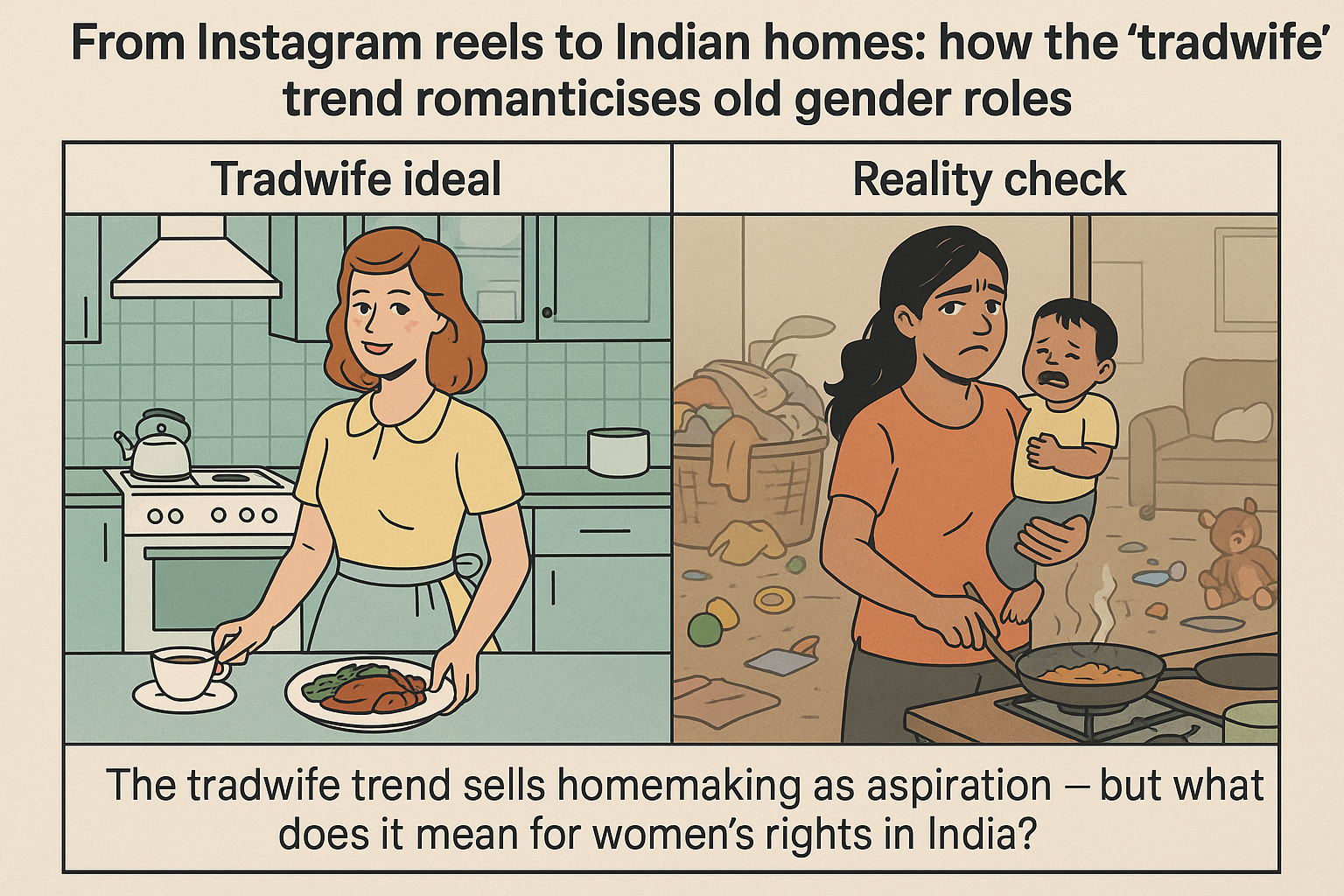
The glossy, retro imagery – women in aprons, baking sourdough, hand-sewing clothes – spread easily on Instagram and TikTok, where it was marketed as aspirational lifestyle content rather than politics.
What It Means in India
For Indian women, the adoption of tradwife ideals carries a different weight. As Armin Virk wrote in her piece –
“Every few days, my Instagram feed shows me the same kind of video: a young woman, barely out of school, married through an arranged setup and filming ‘A day in my life as a 21 year old married woman.’”
On the surface, such reels may look harmless, even joyful. But, Virk argues, “the collective impact of these videos reinforces age-old stereotypes about what women are ‘meant’ to do – cook, clean, marry young, birth babies and ultimately, in the process end up making domesticity their entire personality.”
In a country where female labor force participation is among the lowest in the world, and where economic dependence on men leaves women vulnerable, celebrating early marriage and unpaid domesticity as aspirational carries sharper risks than in the West.
Why It Resonates
- Aesthetic appeal: Retro visuals of tidy homes and soft femininity stand out against the grind of modern life.
- Rebellion against feminism: Framed as an antidote to “burnout feminism” – the exhaustion of juggling careers, childcare, and social expectations.
- Cultural politics: In India, it also dovetails with entrenched ideas of “good wifehood” and duty to family.
The Critiques
- Idealized vs. reality: The curated videos rarely show the exhaustion and precarity behind unpaid domestic labor.
- Exclusivity: Many tradwife influencers come from privilege. As Virk notes, “Some come from wealthy families where their husbands are officers or moneyed elites. Their homes are larger, their meals are organic and their skincare routines all intact.”
- Patriarchy repackaged: Patriarchal norms are dressed up as individual choice, but in practice they restrict women further. Or as Virk puts it, “Even if one woman makes it work for her, it’s still a losing game for the rest of us living on this planet.”
Why It Matters
The tradwife trend is not just about a few influencers baking rotis on Instagram. It is part of a wider cultural debate about gender, labor, and freedom. While some women may genuinely love homemaking, the bigger picture is dangerous: In India, where women are still fighting for education, safe mobility, equal pay, and the right to delay or refuse marriage, tradwife content risks setting back the clock. Pastel filters may soften the frame – but they don’t soften patriarchy.