
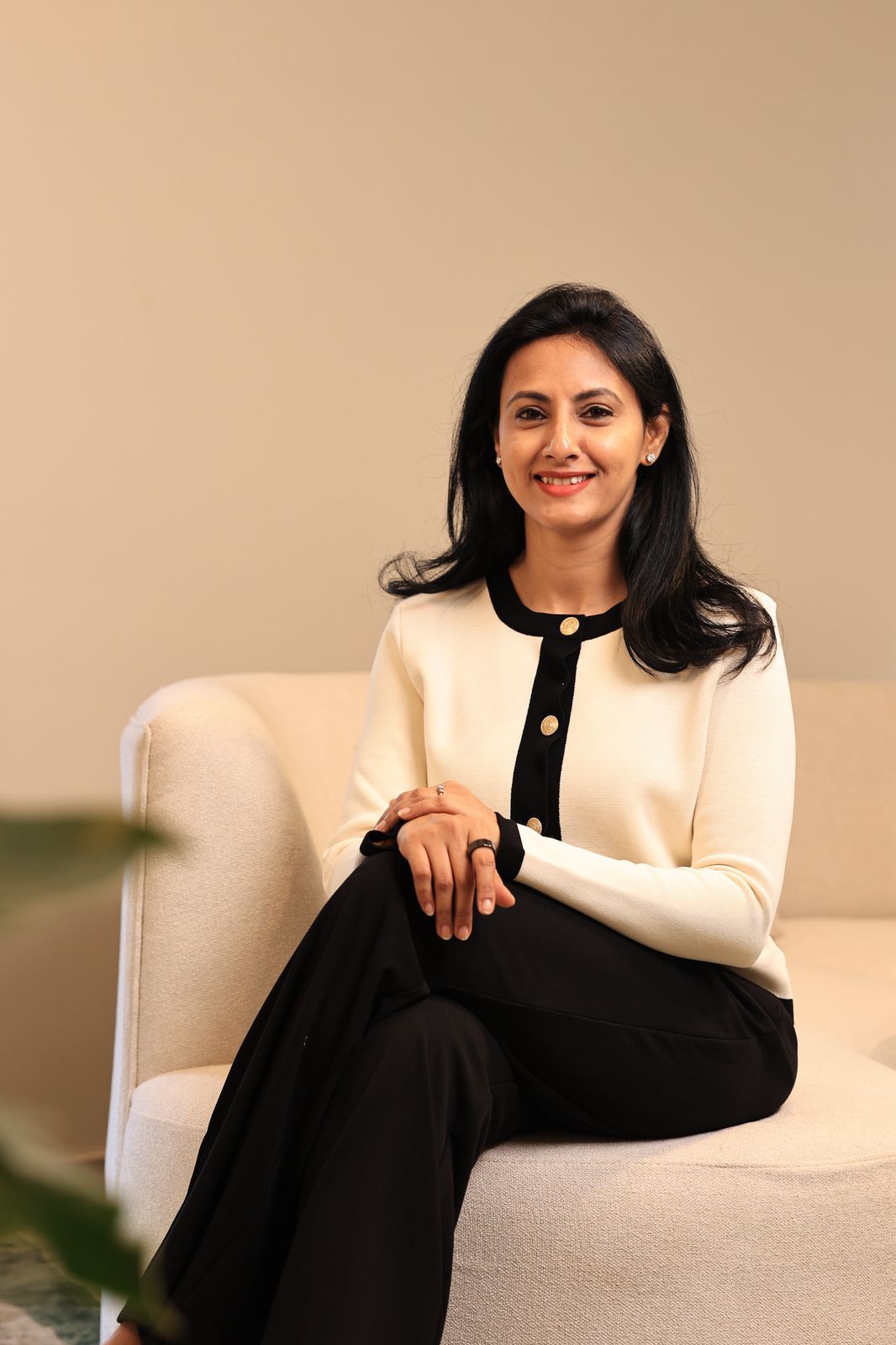
Dr. Samatha Tulla — the co-founder of PMX Health, an ambitious initiative rooted in predictive, preventive, personalized, and participatory care — is building a health system centering longevity and proactive well-being. With a focus on what she calls ‘Medicine 4.0,’ her work is grounded in the belief that aging is not an inevitable decline, but a modifiable process. Through PMX’s data-driven, outcome-oriented programs, she and her team are pushing for a world where people live longer… and also live well! A strong advocate for performance and health optimization, her vision extends beyond individual care to challenging the cultural apathy toward aging and chronic disease. To achieve that, she’s pushing for systemic change in the form of adult vaccination drives, longevity clinics, and doctor-led lifestyle interventions. In this conversation, she shares what keeps her going in a sector that’s still catching up to the future she’s already building.
Tell me about PMX Health, and what inspired its creation.
PMX Health stands for preventive, predictive, personalized, participatory, and physician-driven care; these are the five Ps. We also follow the 3Ms model to ‘measure’ and ‘monitor,’ and finally, X stands for the ‘experience’ clients take away from our work.
The idea was born from a need to align with what I call ‘Medicine 4.0.’ In India, about 70% of chronic diseases are preventable, yet we keep reacting to illness instead of preventing it. So, ours is a new chapter in healthcare where longevity is no longer a luxury limited to a few; longevity is for everyone, and everybody has the power to reverse and prevent early-onset metabolic diseases. We’re building a system where people understand that aging is modifiable, and early-onset metabolic diseases are not inevitable. So, at PMX, we’re creating health optimization programs to help people identify weak areas in their health and figure out focused action plans to improve them before they escalate.
I have to add, though, that my co-founders — Dr. Vinay, an investor and mentor in early-stage healthcare startups, and Bhavya, who heads our growth and business development — have been crucial in building this vision. Without these two minds, none of this would’ve been possible.
What gap are you trying to address with your work, and why do you think it is urgent?
India has one of the youngest populations in the world right now. These young adults, in the next 30 years or so, will become a major part of the country’s elderly population. We have the option to choose if this population will be a healthy one or a sick one, which will redefine India’s healthcare burden and productivity rate. Our purpose is to reduce the healthcare burden in favour of productivity.
Most people tend to think, “Oh, I’m going to grow old anyway and feel the way I’m supposed to feel in my 70s or 80s. What’s the point of trying to work hard to avoid that? Instead, let me enjoy, party, and do what I want.” What they don’t get, though, is that the way we age isn’t set in stone. Rather than treating aging as an inevitable decline, we need to realize it’s something we can actually shape. It’s shaped by what we eat, how we sleep, how we move, and the choices we make in our 20s and 30s. Rather than just trying to reduce disease, we’re working to shift this mindset.
But the belief exists not just among patients, but even among many in the medical profession. Convincing both groups that longevity and healthspan are things you can actively improve, that’s one of the hardest parts!
Would you say that’s been one of the biggest challenges for you in this journey?
Yes, and another big challenge, I’d say, is that people still associate doctors with crisis. Preventive care doesn’t get taken seriously unless someone’s already ill, and by then, it can be too late. We need to break the cycle of waiting for symptoms to act. One-time consultations are not enough, and we want to make people aware of that. Take migraines, for example, people often ignore the pain until it’s too severe and they need to see a doctor.
Basically, we’re trying to say, ‘Don’t wait to break down; build your health while you’re still functioning.’
What kind of change are you hoping to create through your work?
The kind of change I’m hoping for is for many longevity clinics, health optimization programs, and preventive health campaigns to come up. We need many, many layers of prevention: primary medicine, preventive medicine, primordial medicine… all of these layers of prevention should be actively taken care of so that preventive vaccination programs are aligned not just for children but for adults as well.
That includes a shift within the medical community, too! Doctors need to adopt a longevity mindset and understand the importance of realigning people’s body biochemistry and physiology before rushing to medicines. And they need to do it both for their patients and themselves; for instance, it’s important for doctors also to have work-life balance so that their productivity improves. I mean, what they do throughout the day is very important to determine how healthy they are during their work hours.
Most importantly, I believe health doesn’t belong just to the individual. It belongs to the family, the community, the country, and the world. We can only build a better future if we’re well enough to contribute to it. That’s the mindset I want PMX to help build.
Where do you see this work heading in the next few years?
I want to see us building a Center of Excellence for Longevity, where people from all over the world come to optimize health proactively, not just fix problems. We want to develop India-specific longevity protocols, suited for our food systems, climates, and population. That includes research, programs, and deeper collaborations because the way aging unfolds here isn’t the same as it does elsewhere.
We’re also working on building a community of like-minded doctors, researchers, and individuals who see health not as a chore, but as a long-term, joyful investment.
I believe health doesn’t belong just to the individual. It belongs to the family, the community, the country, and the world. We can only build a better future if we’re well enough to contribute to it.
Dr. Samatha Tulla