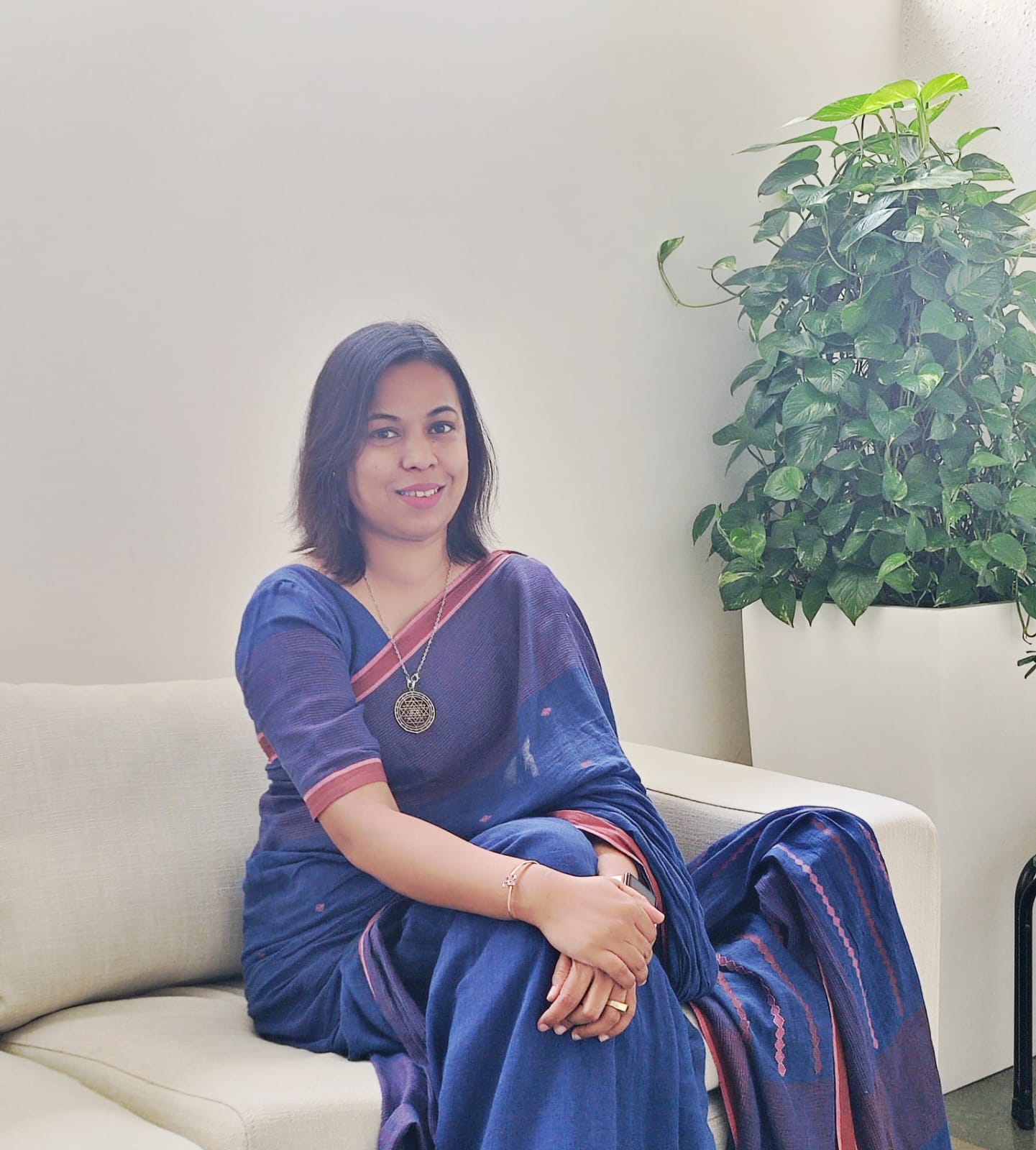
Dr. Reshma Sagari is the founder of Rida Wellness, a modern apothecary dedicated to emotional well-being. It was born from the grief of losing her younger daughter, Rida, to a rare congenital condition. Determined to honour her child’s spirit, she channeled her 20 years of experience in homeopathy and Bach Flower Therapy into creating natural, plant-based remedies designed to meet the emotional body as much as the physical. Dr. Sagari is driven by the belief that healing should feel like home, and that emotional health deserves as much attention as physical health. Beyond her commercial work, Reshma has created two purpose-driven initiatives: ‘Loved Forever,’ a grief support community, and ‘Each Life Matters,’ a support space for parents of children with congenital birth defects, both reflecting her conviction that wellness is about courage and belonging as much as calm.
What inspired you to create your brand, and how did your personal journey shape its beginnings?
Rida Wellness was born from loss and love. I lost my younger daughter, Rida, to a rare congenital condition that turned fatal post-surgery. She passed away in my arms at home when everyone gave up hope. There are no words that can hold the weight of that moment. I didn’t know how to keep going. Over time, people reminded me that she wouldn’t want to see me like this, and somewhere, that thought gave me a reason to show up again. I wondered if I could turn my pain into presence, and that’s how Rida Wellness came to be. I approach it as a conscious apothecary that formulates plant-based, therapeutic remedies for emotional well-being, supporting everything from stress, grief, and burnout to sleep, hormonal imbalances, and daily emotional regulation.
I had always leaned towards a chemical-free lifestyle, but I was disillusioned by what I saw in the market. There were products labeled “herbal,” while hiding harsh synthetics behind fancy branding. So, I began crafting small-batch infusions designed to meet the emotional body as much as the physical one and, in fact, the first blend I ever created was for grief.
In your view, what important gap are you filling, and why is addressing it urgent right now?
The gap Rida Wellness is filling is both cultural and emotional. We create natural, plant-based emotional well-being tools that help people regulate, release, and restore.
Culturally, we’ve been conditioned to think of wellness in silos — either as luxury, or as strictly medical. Emotional well-being, in particular, is still treated as either a crisis point (requiring therapy or pills), or something fluffy and optional. There’s very little in between. What’s missing is a space where emotions are treated as everyday, embodied experiences; where emotional ache is seen as valid, where support is accessible, and where healing doesn’t always have to come in clinical or pharmaceutical form. And most people don’t even realize how much they’re holding in their bodies — the tension, the grief, the overstimulation, the inherited stress patterns. They’re running on survival mode, and that’s where we come in.
What makes this feel urgent is the sheer scale of emotional disconnection we’re seeing today across workplaces, families, and even within ourselves. The nervous system was never meant to carry this much for this long, and naturally, people are looking for safer, more sustainable ways to support their emotions without defaulting to pharmaceuticals or numbing distractions. And especially post-pandemic, I think we’re at a point where emotional well-being needs to be mainstreamed, and also made doable.
What has been the biggest challenge you’ve faced in building Rida Wellness, and how have you navigated it?
One of the biggest challenges I’ve faced has been not being taken seriously, which is common, I guess, for a woman founder in the wellness space, who’s working with emotional health, and creating products rooted in natural remedies. There’s a stereotype that if it’s made by a woman and involves flowers or oils, then it must be a hobby or something “cute.” I’ve had people walk into our wellness booth and dismiss it as “a kitchen venture.” I’ve also had investors and buyers underestimate the science, the strategy, and the scale we operate at simply because we chose to work with emotional well-being in a gentle, natural way.
But I don’t believe in proving my worth by arguing, so I focused on creating exceptional, effective formulations that could stand on their own, while also building our infrastructure for scale and integrity, and not just short-term sales. I designed a product and experience that emotionally resonates, yes, but is also backed by logic.
To be completely honest, the challenge is still ongoing in many ways because we live in a society where emotional health isn’t always viewed as “real” health, and where natural medicine is still often dismissed. But I’ve learned that the best way to disrupt a system is to build better, beautiful alternatives that people want to be part of.
What kind of change are you hoping to spark through your work?
I’m working at the intersection of two kinds of change, and I believe they’re interdependent. The first is a systemic shift in how we view emotional well-being, especially in workplaces and leadership spaces; the other is an individual lifestyle shift to help people move away from over-dependence on pharmaceutical or numbing solutions, and toward safe, natural, gentle remedies that genuinely support the emotional body. Most people don’t realize that emotions can be rebalanced, soothed, and harmonized without always needing to suppress them. The nervous system can be supported, grief can be held, anxiety can be softened, focus can be strengthened, and all of this can be done safely, beautifully, and holistically, if we just allow ourselves to return to nature’s tools.
At an industry level, I want to prove that emotional well-being is neither fluff nor is it optional. It’s the foundation of how we relate, lead, and live. At a community level, I want people to experience the relief and re-alignment that comes from knowing they’re not “too sensitive” or “too emotional,” and that their feelings are valid and deserve to be honoured by a system that supports them.
Looking ahead, where do you see Rida Wellness, and yourself, in the next few years?
This next chapter is about scaling with soul and clarity. We’re moving from being fully bootstrapped to actively seeking aligned investors, who understand the power of natural medicine, the urgency of emotional health, and the growing need for alternatives to pharma-led wellness. So, over the next two years, our evolution is threefold: product deepening (or, expanding our emotional wellness range to include ritual-based care curated as sensory allies for nervous system nourishment); experience-led healing (or, developing guided audio tools, digital rituals, and emotion-based learning experiences designed to help people pause, process, and heal); and corporate and global reach (which is about entering wellness-forward international markets like Singapore, UAE, and Denmark while consulting with Indian organizations to build emotionally intelligent workplace cultures.)
Personally, I’m also stepping into strategic leadership roles, and offering my expertise in emotional well-being to boards and founders who are building not just scalable ventures, but emotionally resilient ecosystems. I genuinely believe the future belongs to the emotionally anchored, and I want to make that future accessible, beautiful, and safe.
Is there anything deeply personal or purpose-driven you’d like to add that we haven’t touched on yet?
Yes, Loved Forever and Each Life Matters, which aren’t part of my commercial product ecosystem, but are integral to why I do what I do; they are the compass that guides Rida Wellness. The former is, perhaps, India’s first online grief support community that I started it at a time when I couldn’t find an ecosystem to hold space for my own journey through bereavement. The latter was seeded as an emotional and social support space for parents raising children with congenital birth defects, a space I saw was missing entirely.
As for Rida Wellness, ultimately, I hope when people come across my work, they feel that there’s finally a wellness brand that truly gets them.
I’ve learned that the best way to disrupt a system is to build better, beautiful alternatives that people want to be part of.
Dr. Reshma Sagari