
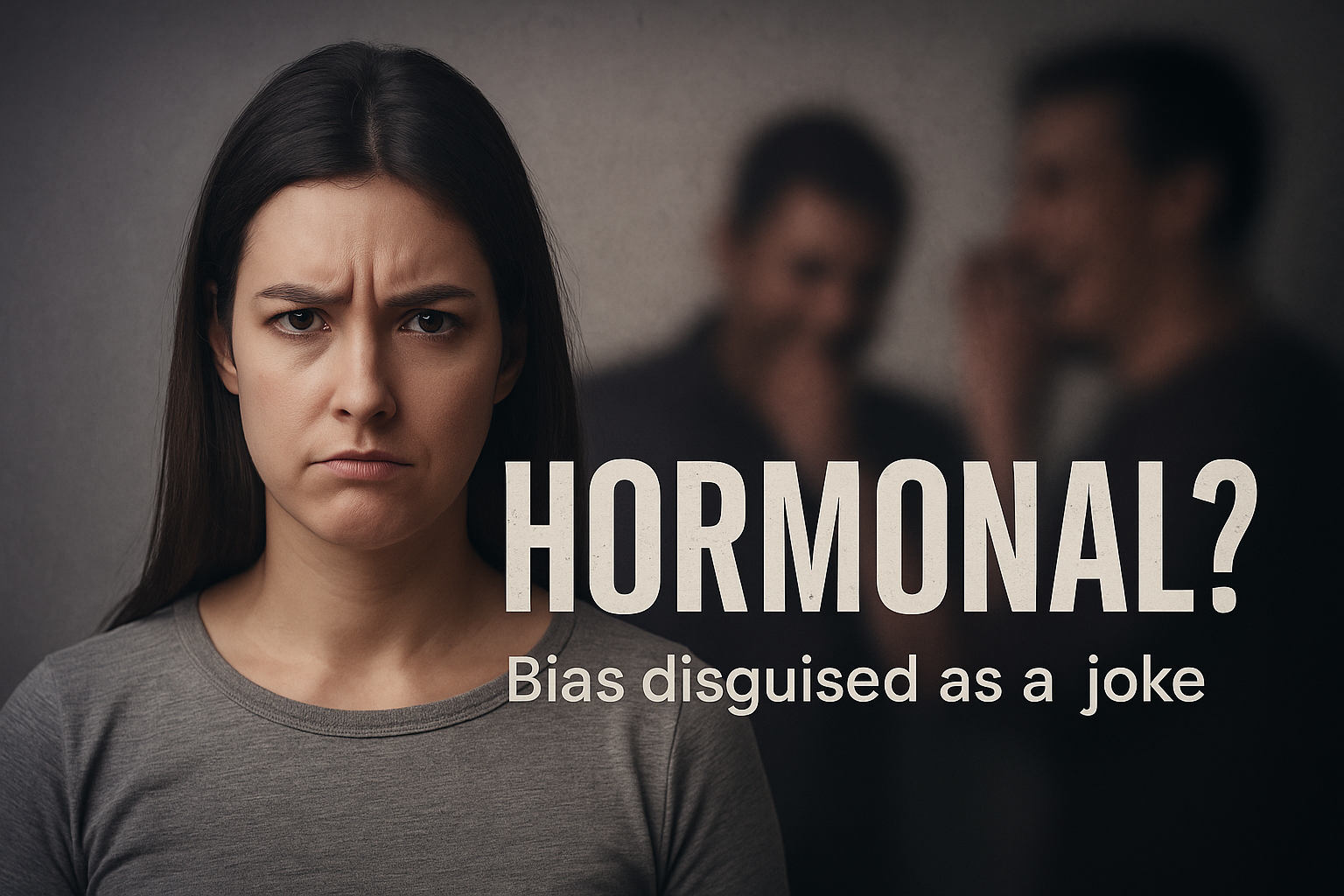
Being called “hormonal” even jokingly reflects gender bias, particularly if it is used to undermine, dismiss, or delegitimize your feelings or behavior based on gendered assumptions.
Why it’s biased:
- Stereotyping: The term “hormonal” is often used to stereotype women as overly emotional, irrational, or unstable—especially during menstruation, pregnancy, or menopause. This aligns with long-standing sex stereotypes that label women as less competent or less rational due to their biology.
- Dismissal of agency: Using “hormonal” to discredit someone’s viewpoint can be a form of gendered silencing—a way to suggest that emotions are not valid or reasoned, thus undermining credibility and reinforcing a power imbalance.
- Double standard: Men are rarely labeled “hormonal,” even though hormonal shifts affect all genders. This reveals an unequal standard in emotional expression and behavior.
When it’s especially problematic:
- In workplaces or public settings, it can undermine professional credibility.
- In personal relationships, it can be a tactic for emotional control or manipulation.
- In legal or medical contexts, it may amount to institutional stereotyping with real consequences.
How to respond:
You might consider asking for clarification, such as:
“What do you mean by ‘hormonal’?”
This can help expose the underlying bias and shift the conversation.

“Today Was a Mirror of Every Other Day. Care, Work,
It’s fashionable to ask what women want. We rarely wait for the answer. Not anymore — Wednesday Online will show…


When Working Mothers Stop Trying to Make It Work
You can quit a job, you can’t quit your children. Sirisha Ramanand The first time I saw her, she had a laptop…

Why Mothers Quit – The Straw that Broke the Camel’s
One of the curious things about the mothers I’ve spoken with is the timing of when they quit their jobs….


Burnout vs Depression: Recognising The Differences
Women have a higher likelihood than men of developing both burnout and depression. Symptoms of depression and burnout can overlap. Burnout can…

The second shift: how unpaid work impacts women’s mental health
Women, globally, spend almost 11 billion hours daily in unpaid work. The estimated cost of this second shift is estimated to…

Hormone Replacement Therapy (HRT): Myths, Risks, and Benefits Every Woman
Hormone Replacement Therapy, or HRT, is a vastly misunderstood aspect of women’s health. While initially studied and prescribed for managing…