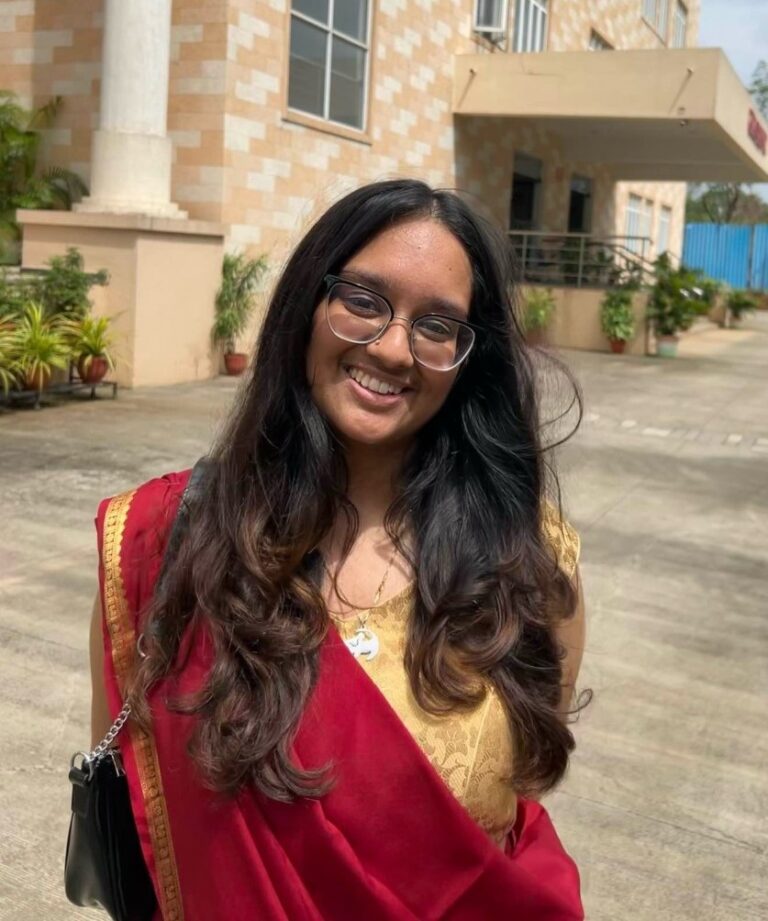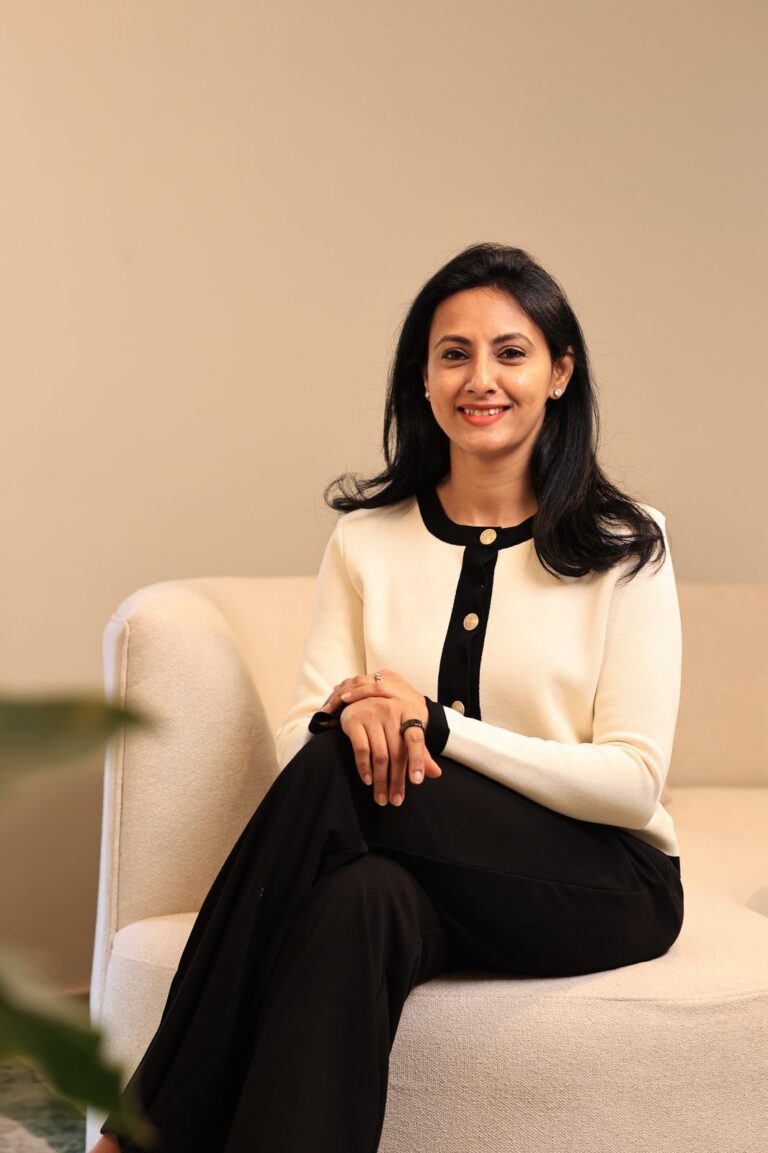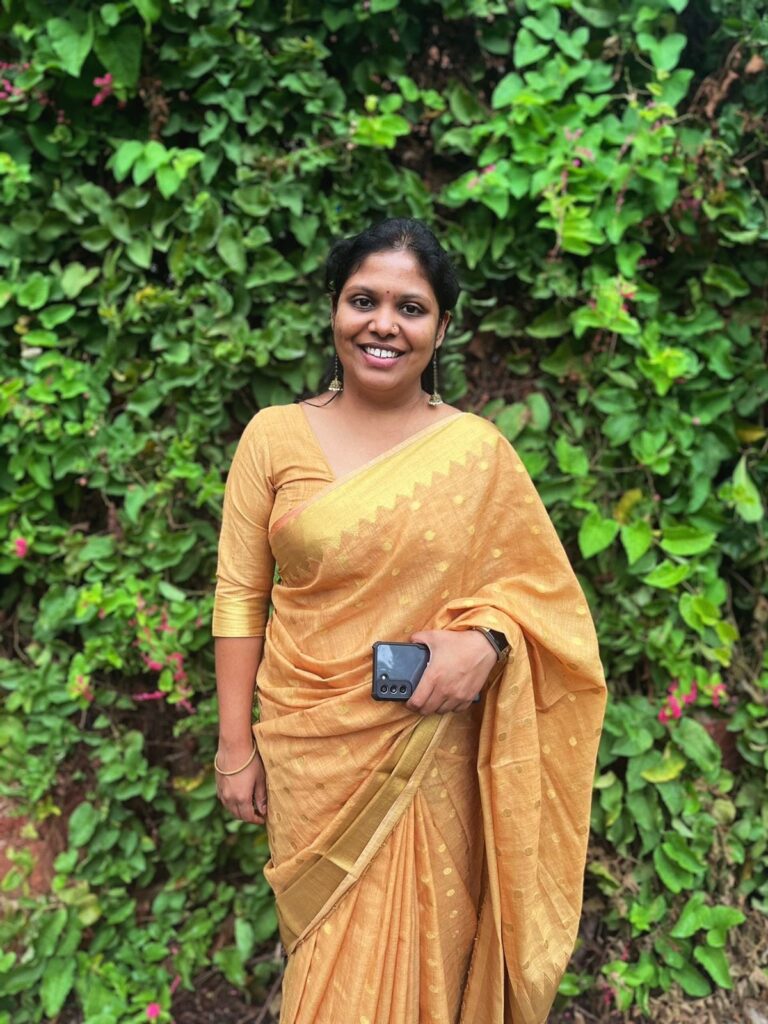
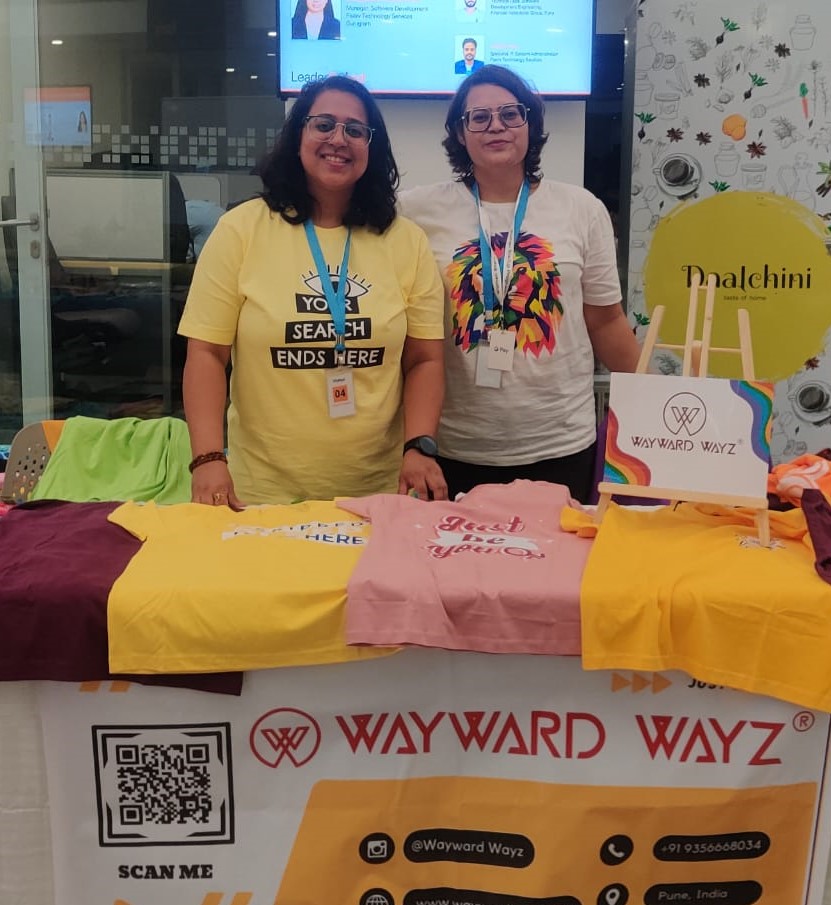
Akanksha Sharma and Parth Om, two queer entrepreneurs from backgrounds in tech, media, and operations, co-founded Wayward Wayz as a declaration of identity, resilience, and belonging. Emerging from a shared frustration with how the world often demands queerness be toned down, muted, or hidden, the brand began as a conversation about how fashion could become a language of rebellion and truth, instead of conformity. With that in mind, Akanksha and Parth have continued to focus on creating clothes that carry queer stories, indigenous art, and fandom cultures, challenging people to take up space without apology. Their recent collaboration with The Humsafar Trust, which earned them the Dolphin Tank grant, reflects the brand’s role in the larger ecosystem of queer entrepreneurship in India because, for the two of them, their brand is a bridge between the worlds they care deeply about: queerness, art, tech, and compassion. In this interview, they talk about how every piece they design is a fragment of lived experience, an act of defiance, and a reminder that fashion can be survival, pride, and belonging — all rolled into one!
Tell me more about your organization, and what drew you to the work you’re doing now.
Wayward Wayz started as a conversation between Parth and me — two queer people who felt the weight of constantly toning ourselves down to fit the world. My own life had always been rooted in logic, systems, and tech. I worked for years in automation and AI, building solutions that ran like clockwork. But outside of work, in my own skin, I often felt invisible or muted.
The turning point was when Parth and I realized that fashion has always been a language of rebellion and truth — from ancient sculptures to pride marches. Yet, the everyday clothes around us rarely tells us those stories. That’s when we decided that if it doesn’t exist, it just means we’ll create it ourselves. And so, Wayward Wayz became that space where queerness, art, and expression could breathe freely.
What gap do you think you’re filling with your work, and why does that feel urgent or necessary to you right now?
I think we’re filling a very human gap of the need to be ‘seen.’ There are so many of us — queer people, neurodivergent folks, people who just don’t fit the standard mold — who silence ourselves before we even step out of the door, and have to ask, “Is it safe? Will I be judged? Will I lose opportunities if I wear what feels true to me?” We want to step into that silence and say, “You don’t need to shrink here.”
We create clothes that are not only expressive but also deeply inclusive, carrying queer stories, indigenous art, and fandom cultures. Right now, when visibility is under attack in so many parts of the world, this work feels urgent because in times like this, a t-shirt or a print can be more than fashion — it can be survival, it can be pride.
What’s one big challenge you’ve faced in your journey so far, and how did you deal with it?
For me, the biggest challenge was proving that we belonged in an industry we didn’t come from. I had a decade in tech, Parth had a background in media and operations, but we were both outsiders to fashion. Vendors would dismiss us, resources were scarce, and even well-wishers told us it was too niche.
The only way through was to keep building anyway. So we did just that.
In the process, we learned printing techniques ourselves, tested designs at home, and found strength in our community that helped us keep going. Slowly, people started listening, and now our brand isn’t just an idea anymore, but something people wear, celebrate, and connect to.
What kind of change are you hoping to create through your work, whether for your community, industry, or beyond?
I hope our work makes people feel less alone. For the queer community, for dreamers and rebels, for artists whose traditions risk being forgotten, I want our clothes to feel like a hand on their shoulder saying, “Hey! You belong here.”
For the larger fashion industry, I want to show that fashion doesn’t have to come at the cost of people or culture. It can honor roots, celebrate diversity, and still be global. If Wayward Wayz can prove that, maybe it can push the industry toward a little more humanity.
What’s next? Where do you see this work — or yourselves — going in the next couple of years?
Recently, we collaborated with The Humsafar Trust, and through them, we were awarded the ‘Dolphin Tank’ grant, which is a program that supports queer entrepreneurs across India. That recognition was a reminder that we’re part of a bigger ecosystem that’s rewriting what queer entrepreneurship looks like in this country. In the coming years, I see us deepening that work by creating collections that are unapologetically expressive, and expanding how fashion can be both inclusive and rooted in culture.
Personally, I also want to bring in my background in automation and my passion for animal rights into what we build next, so that Wayward Wayz grows not just in scale, but in values, too!
Anything else you’d like to add?
What I’d add is this: Wayward Wayz is not just a brand for me but a bridge between the worlds of tech, queerness, art, and compassion that I care about. Every piece we put out holds a fragment of our lives, our struggles, and our hopes. And that’s what makes this journey worth it. We’re not just selling clothes, but carving out space — for ourselves, for our community, and for anyone who has ever felt that who they are is too much or not enough.