It’s fashionable to ask what women want. We rarely wait for the answer. Not anymore — Wednesday Online will show you exactly how women live, how they feel, and what they want.
A woman in India woke at 4am and went for a walk alone. “Just me and my thoughts,” she wrote. “Small moments like this remind me why we keep going.”
A woman in Algeria wrote: “They don’t see it but we do. Every hour, every sacrifice, every moment of putting ourselves last.”
A woman — location unknown, as all entries are anonymous — wrote simply: “Today was a mirror of every other day. Care, work, exhaustion, repeat. When does it change?”
These are wall notes from Wednesday Online, a platform that re-launched publicly this week with a single, unfashionable ambition: to show exactly how women live, how they feel, and what they want — not through surveys conducted once a decade, but through daily, anonymous check-ins that build a transparent, real-time picture of women’s lives.
Many of you will remember that Wednesday Online began first as a newsletter, and then as a news and information website for women. But even then, something in me remained restless.
What was I really adding to the discourse? How was this changing anything? These questions kept returning.
I knew the deeper gap was not the absence of information — it was the absence of women’s own voices in the systems that shape their lives. Policy, work, money, health, safety, care, marriage, motherhood, aging: decisions are made around these realities every day, often without the women most affected being meaningfully heard.
Especially not the ordinary woman.
That is what Wednesday Online is trying to make visible. Through daily, anonymous check-ins, it creates a living record of how women are actually doing — what they are carrying, what they want, what they fear, what they need, and what they are no longer willing to accept.
Because women do not only need to be represented in stories. They need to be counted in truth, heard in real time, and considered before decisions are made about their lives.
The early data from the check-ins suggests that picture is not a comfortable one.
WHAT THE NUMBERS SHOW
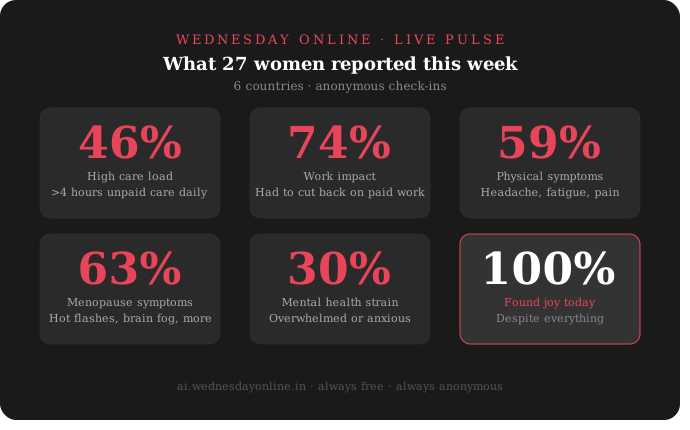
Across 27 check-ins from women in six countries, the picture is consistent. Forty-six percent of users report providing more than four hours of unpaid care daily. Seventy-four percent say care forced them to cut back on paid work. Fifty-nine percent are experiencing physical health symptoms. Sixty-three percent report menopause or perimenopause symptoms. Thirty percent describe feeling overwhelmed or anxious.
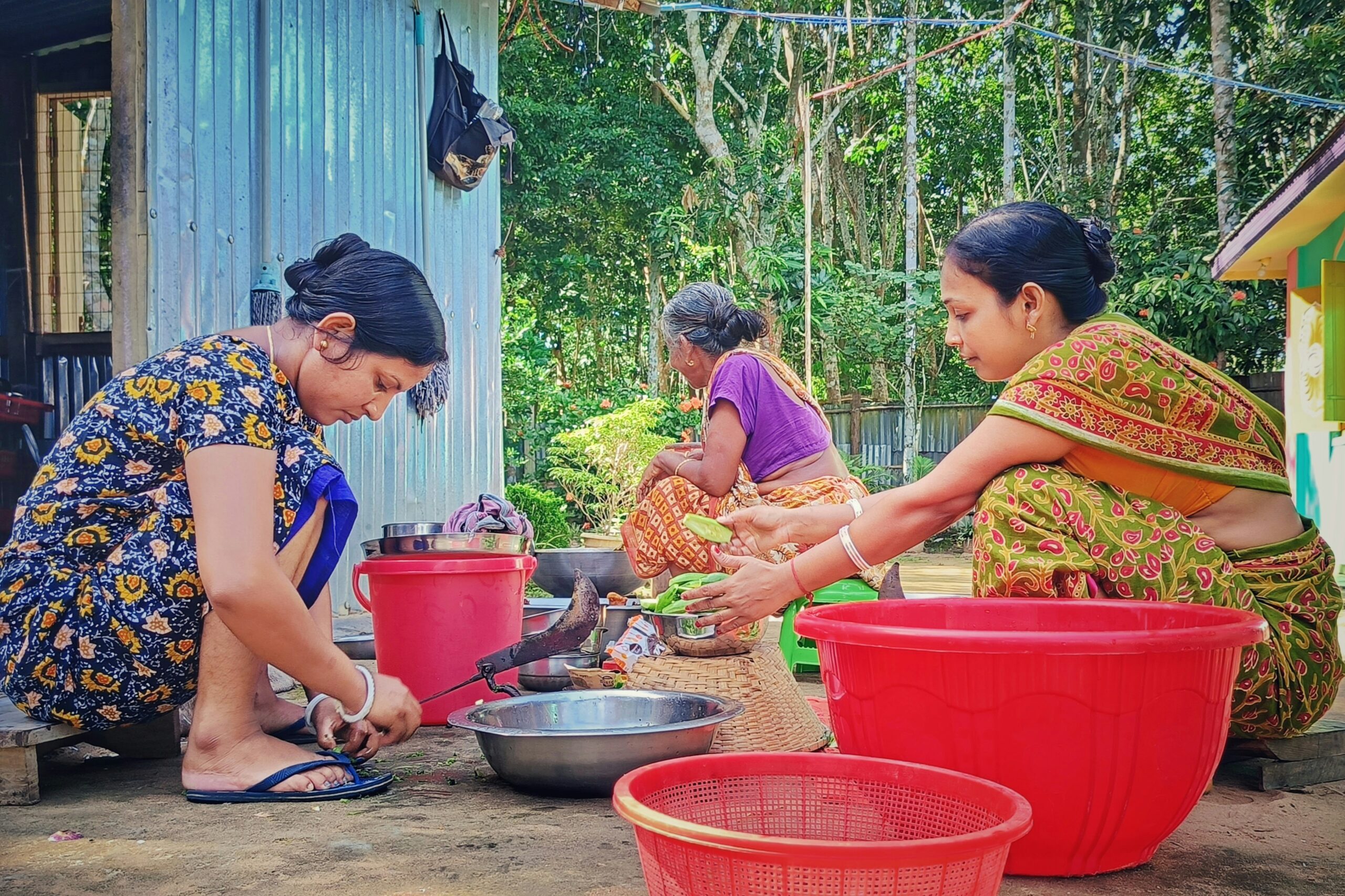
India’s 2024 Time Use Survey, cited in the Economic Survey 2025-26 tabled in Parliament, found that Indian women spend 363 minutes a day on unpaid domestic and care work — nearly three times the 123 minutes spent by men. In five years, that burden fell by just ten minutes a day.
Wednesday Online’s check-ins put a human layer beneath those national figures — daily, individual, accumulating over time — so that the cost of care is no longer only a statistic.
“My career quietly shrinks every time someone at home needs me. Menopause showed up uninvited again. Some days just surviving IS the achievement.”
— India
“They don’t see it but we do. Every hour, every sacrifice, every moment of putting ourselves last.”
— Algeria
“a morning walk at 4 am. just me and my thoughts. Small moments like this remind me why we keep going.”
— India
“Tired, but still standing. There is no good choice between work and care — just the one I made.”
— Anonymous
These are not complaints. They are data.
THE RESILIENCE QUESTION
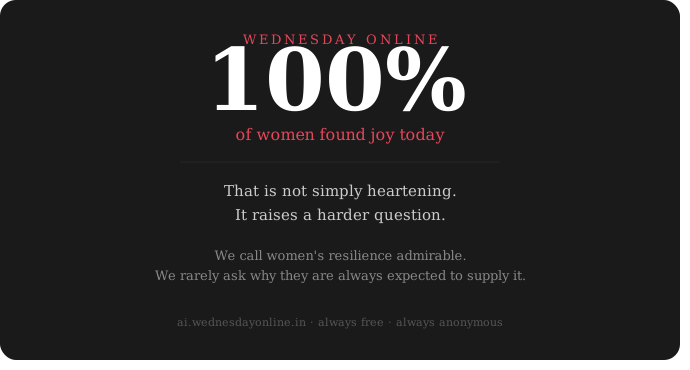
One hundred percent of check-in users reported finding at least one moment of joy in their day. A morning walk. Music. A conversation. Trekking. Small things, held tightly.
That figure is not simply heartening. It raises a harder question.
Women’s capacity to find joy inside overloaded, exhausting, physically demanding days is real. But it is also a capacity that has been required of women for a very long time. We call it resilience and admire it. We rarely ask why it is always women who are expected to supply it.The 100% joy finding is not just evidence of strength. It is also a question: how long should women have to be this resilient before the systems around them change?
A SPACE TO BE WITNESSED, NOT OPTIMISED
Wednesday Online does not offer habit streaks, wellness scores, or prompts to do more. It does not ask women to reframe their exhaustion or optimise their recovery. It is built on a different premise: that what women need is not another system for managing their load, but a space to set it down, name it, and find it reflected in other women’s experience.
Women on the platform can see anonymised aggregate data from other users — how mood, energy, overload, and health symptoms compare across the group. The intent is solidarity. The recognition that what feels personal is often structural. That other women are asking the same question — when does it change? — on the same days, in the same silence.
Are you ready to check in?
Click here: https://ai.wednesdayonline.in