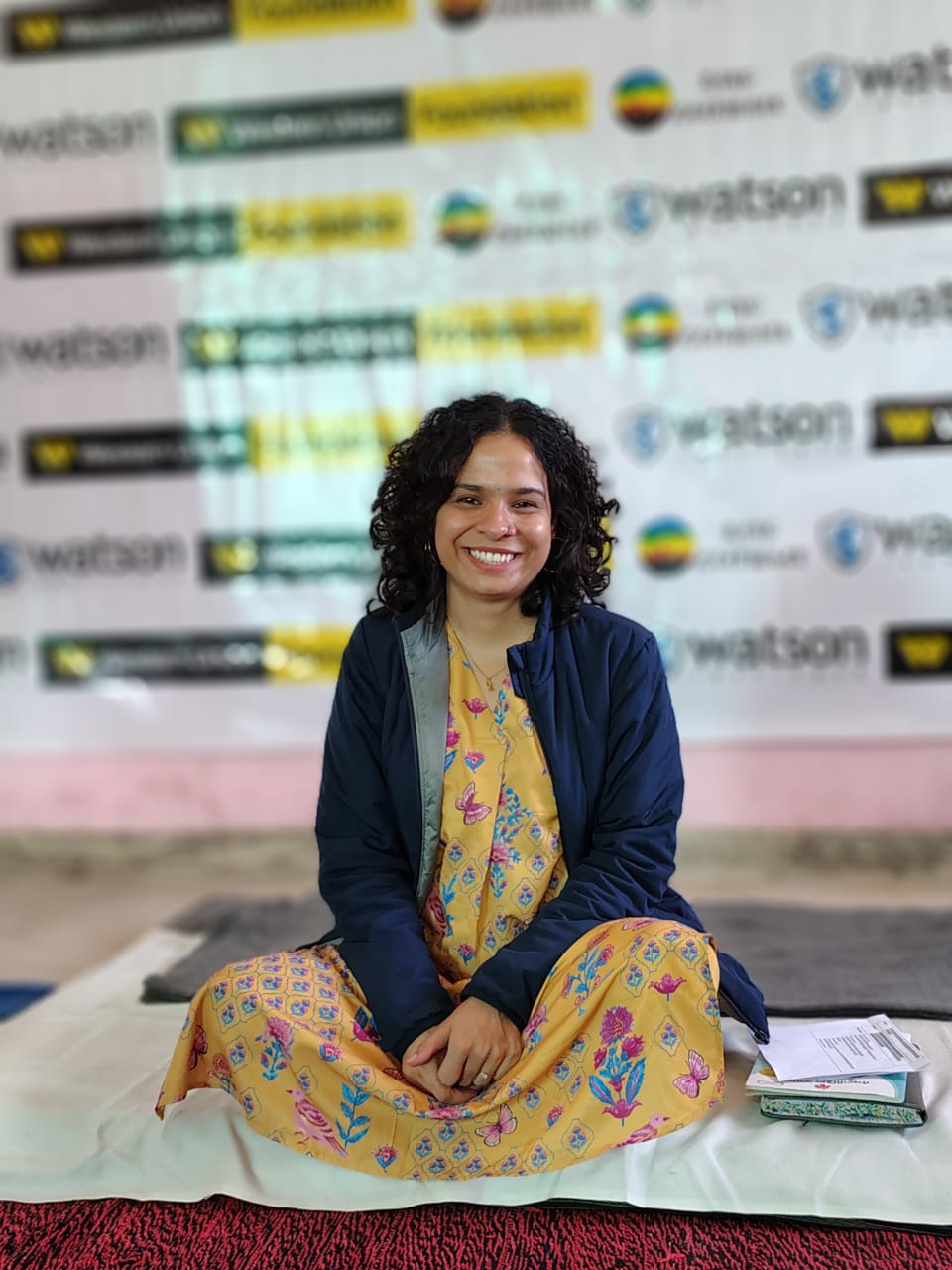
Vandana Asha is the founder of Rang Kaarwaan, a women-led, grassroots collective in Champawat, Uttarakhand that works with rural youth and adolescent girls through theatre, storytelling, and creative education. Vandana’s mission is to build spaces where young people, especially first-generation learners and girls, can reflect on who they are, challenge harmful norms, and lead change in their own communities. In this interview, she reflects on the roots of her work, the invisible gaps in rural education, and what it means to build spaces of radical care, creativity, and leadership for young girls.
What led you to start Rang Kaarwaan, and what felt urgent about this work when you began?
Rang Kaarwaan is something that emerged from my lived experience. I’ve always been an artist at heart, you know? Like, I used to write poems, dance, perform, and dream wildly even as a child in a small town. But as I grew up, I saw how systems around me — schools, families, society — all slowly chipped away at that spirit, especially for girls.
There’s one moment that really stuck with me: I was facilitating a session in a school, and a girl said, “Didi, nobody’s ever asked me what I think.” That sentence made me realise how invisible many young girls feel, even to themselves. That’s when it became clear to me that we don’t just need better schools or policies, but radical spaces of belonging and becoming! That drew me to build spaces where young people can feel seen, ask questions, and imagine something new. So, that’s what I set out to build… with a growing community of young people who carry this dream with me.
What gap do you think you’re filling, and why does that feel urgent or necessary to you right now?
I think we’re filling a very real, often invisible gap, which is the emotional, creative, and leadership gap in education. In rural India, schools are often under-resourced and overburdened, and there’s no room to talk about emotions, consent, gender, mental health, or purpose. Most adolescents are just memorising textbooks, not even being given the chance to explore who they are, or what they care about. And rural youth — especially girls, of course — are rarely given the chance to lead, speak, or imagine alternatives.
At Rang Kaarwaan, we flip that script. We build leadership from within. We train young people, mostly women from the region, to become arts-based facilitators, educators, and mentors to reclaim their own voices while helping younger girls do the same.
This feels urgent because we are watching generations of rural girls grow up without safe spaces, without mirrors to their potential, and without mentors who reflect their context. At the same time, we see brilliant, curious youth who want to give back but don’t know how. So, we’re trying to create a path that connects those two needs, with art, love, and deep listening.
What’s one big challenge you’ve faced in your journey so far?
One really big challenge has been sustainability, not just financial, but also emotional and structural. Being a young woman running a grassroots organisation in a rural area often means holding too much, too soon. I’ve had moments of burnout, isolation, and impostor syndrome. There were phases where I questioned everything — the impact, the direction, even my own capacity.
On top of that, there’s the pressure of survival fundraising. We’re not a big-name organisation with legacy donors. We’ve had to work hard to even be seen by funders. There were months we didn’t know how we’d pay our fellows, and times when our whole team worked without salaries because we believed in the mission.
How did you deal with it?
In short, by leaning into community. I started letting go of the idea that I had to be the one holding it all. I began to centre care — for myself, for the team, for the process. We built internal rituals like reflection circles, peer mentoring, and creative breaks.
I also asked for help. I found mentors, peers, and local elders who kept me grounded. And slowly, I watched our local team — young women who joined as participants — become leaders themselves.
That’s what gave me the strength to continue.
What kind of change are you hoping to create, whether for your community, industry, or beyond?
I want to see a future where rural girls are decision-makers, and not just beneficiaries; where local youth run their own learning spaces, design their own curriculum, and shift narratives in their own voice. I want schools to be places of dialogue, they should be places where a girl can say, “I matter,” and truly believe it.
And in the long run, I want to challenge how we see “development.” It’s not about bringing solutions from the outside, but about recognising wisdom, joy, and leadership that’s already present in the community, and creating the right environment for it to blossom.
Beyond the community, I want to nudge the education and social sector to centre radical love, inner work, and creativity as core to change. We need more heart and less jargon!
What’s next for you?
We’re at a powerful transition point. Over the next 2-3 years, I want to deepen Rang Shaalaa, our youth fellowship, and reach at least 5,000 adolescents with our curriculum. We want to build a stronger leadership pipeline where fellows don’t just facilitate, but go on to mentor, design, and run programs themselves.
We’re also dreaming of setting up a more permanent creative learning space — a community school or arts hub, that centres theatre, storytelling, gender, and leadership. I imagine it as a space where rural girls can walk in and feel free… to be and to grow.
And, personally, I also want to start writing more — sharing my learnings, my wounds, my wonder. Maybe that becomes a blog, a podcast, or a book? Maybe just a practice? Either way, I know the inner work will remain just as important as the outer.
Is there a message, or anything you’d like to add?
Just this: you don’t need to be perfect, polished, or powerful to begin; you just need to show up honestly and listen deeply. Keep showing up, even when no one is watching. The world doesn’t change because one hero rises. It changes when many people dare to become whole.
The world doesn’t change because one hero rises. It changes when many people dare to become whole.
Vandana Asha